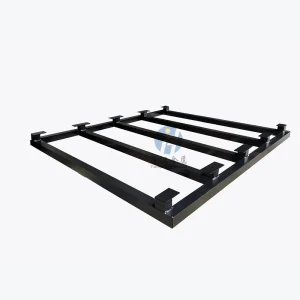
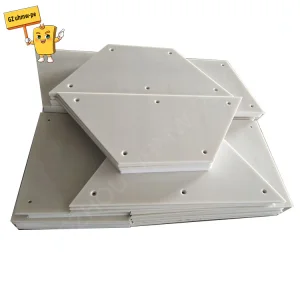
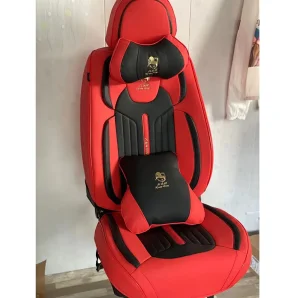
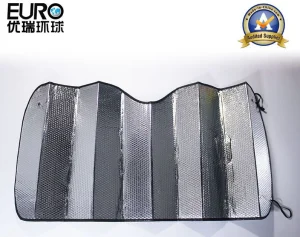
Explore our core engineering items and top-performing custom installations distributed worldwide.
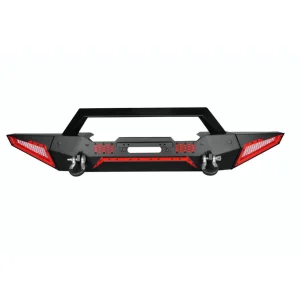
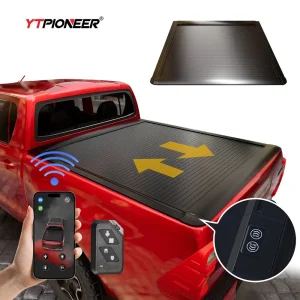

Guangzhou Motix Car Co., Ltd. is a professional automotive accessories manufacturer specializing in pickup truck upgrades and interior protection solutions. With a strong focus on innovation, durability, and user-oriented design, Motix delivers high-quality products tailored to global automotive markets.
Our product portfolio covers a wide range of solutions, including car floor protection systems, truck bed utility enhancements, cargo management accessories, and exterior upgrade components for pickup trucks. Each product is engineered using premium materials to ensure long-lasting performance, resistance to wear, and adaptability to diverse driving conditions.
Backed by an experienced R&D team and advanced manufacturing facilities, Motix supports both OEM and ODM services, enabling clients to develop customized solutions that meet specific market demands. Strict quality control processes are implemented throughout production to guarantee reliability and consistency.
Motix is committed to enhancing vehicle functionality, comfort, and protection while helping partners stay competitive in the evolving automotive aftermarket industry. With a customer-centric approach, efficient supply capabilities, and a global outlook, Guangzhou Motix Car Co., Ltd. aims to build long-term partnerships and deliver value-driven automotive solutions worldwide.
Unlocking the full potential of combustion, hybrid, and electric drivetrains through smart microcontrollers.
The global automotive aftermarket has transitioned from simple mechanical enhancements to highly complex digital tuning ecosystems. Today, Car Performance Chips (also known as ECU Piggyback Controllers, OBD-II Dynamic Reprogrammers, or Throttle Response Modules) represent a major sector within the smart vehicle upgrade vertical.
As emission parameters tighten globally and fleet operators require customized performance characteristics, standard factory mappings often fall short. Factory ECUs are programmed with safe, conservative defaults designed to accommodate lower fuel grades and irregular maintenance intervals. High-efficiency tuning modules optimize these parameters, delivering improved torque curves, faster throttle actuation, and optimized fuel ratios.
By leveraging premium automotive-grade microprocessors and CAN-bus protocol bypass architectures, Chinese manufacturers deliver cost-competitive, reliable, and precise chip designs. These modules sit directly in line with critical sensors (such as Manifold Absolute Pressure - MAP, Intake Air Temp - IAT, and fuel rail pressure sensors) to dynamically manipulate signals and achieve optimal combustion cycles.
Understanding the key structural differences between direct ECU remapping, piggyback control units, and OBD-II modules.
| Feature Category | OBD-II Tuning Chips | Piggyback Tuning Boxes | Direct ECU Remashing (Flash) |
|---|---|---|---|
| Installation Complexity | Plug & Play (OBD port access only) | Medium (In-line sensor harness wiring) | High (Requires specialized bench tools) |
| Warranty Preservation | 100% reversible; leaves no trace | Physically removable; zero trace left | Overwrites factory flash counter (voids warranty) |
| Signal Customization | Dynamic correction via CAN-bus data stream | Direct analog/digital sensor modification | Permanent rewriting of lookup tables |
| Adaptability | Learns driver patterns in 100-200 miles | Fixed MAP curves based on physical dials | Static custom map (requires re-flash for changes) |
| Target Audience | Retail consumers, light-duty commercial fleets | Turbocharged vehicles, diesel truck enthusiasts | Professional motorsport, extreme modifications |
The transition from analog resistance adjustments to deep artificial intelligence and edge computing.
Contemporary chips leverage continuous parameter monitoring. By analyzing driver load, throttle speed, and localized barometric air density, chips dynamically scale fuel injector timing up to 100 times per second.
As hybrid configurations (like the CRV Hybrid) proliferate, smart modules optimize battery-to-engine torque transition cycles. Adjustments ensure smooth power delivery, reduced engine load during peak electrical draw, and optimized regenerative braking control.
The roadmap shows future generations featuring integrated IoT modems. Fleet dispatch units can adjust vehicle throttle sensitivity, speed limiters, and fuel map curves remotely based on global geo-fencing profiles.
Tailoring system calibrations to localized geographical regulations, climates, and specific commercial applications.
Severe Climatic Adaptability (MENA & Nordic Regions): In high-temperature desert environments (such as the Middle East), performance chips are configured with heat mitigation algorithms. They detect thermal overload and safely scale back fuel maps to protect cylinder heads. In contrast, Nordic and Arctic operations utilize cold-start enrichment maps to secure clean engine starts and smooth transmission warm-ups.
High-Altitude Off-Road & Mountain Hauling: High elevation results in lower oxygen density, causing traditional turbocharged pickup trucks to suffer from turbo lag and loss of torque. Customized chip profiles adjust target manifold pressures (wastegate duty cycles) to compensate for thin air, restoring power output for off-road operations and heavy mountain hauling.
Last-Mile Logistics Fuel Optimizers: For metropolitan delivery vans and commercial truck fleets, performance chips can be programmed to run specialized eco-tunes. By limiting maximum throttle inputs and adjusting engine shifting patterns early in the power band, operators see fuel efficiency gains of up to 15-20%, cutting operating costs across hundreds of fleet vehicles.
Reversible Consumer Leases: Modern vehicle lease agreements restrict permanent modifications. OBD-II plug-and-play modules are highly sought-after in North American and European consumer markets because they provide instant gains without altering the physical engine layout. Users unplug the module before routine service visits, preventing warranty disputes.
Emissions Compliance Integration: In regions with strict emissions standards (such as California CARB or Euro 6d), performance tuning must not increase NOx or particulate matter. Our advanced dynamic tuning models adjust within the legal fuel-to-air boundaries, keeping vehicle emissions within compliant limits while optimizing turbo spool times and throttle response.
Critical considerations for professional importers, distributors, and aftermarket automotive brands.
When procurement managers source performance chips and automotive control systems from China, product reliability under harsh engine bay conditions is paramount. Electronic components must withstand extreme vibrations, thermal cycling (from -40°C up to 125°C), and humidity ingress.
Our OEM/ODM engineering partnerships ensure that chips are produced using industrial-grade, solid-state capacitors and multi-layer PCBs protected by high-durability epoxy potting. We utilize standardized, high-speed SMT assembly lines with automated optical inspections (AOI) to eliminate solder joints and micro-cracks before shipping.
Additionally, we work closely with importers to provide customizable enclosure branding, custom harness lengths, and custom CAN-bus parameter programming to ensure seamless compatibility with domestic vehicle models in target markets.
Addressing the critical engineering, warranty, and compatibility queries from international buyers.
Broaden your inventory with high-demand vehicle protection, utility components, and styling accessories.
 Motix Car